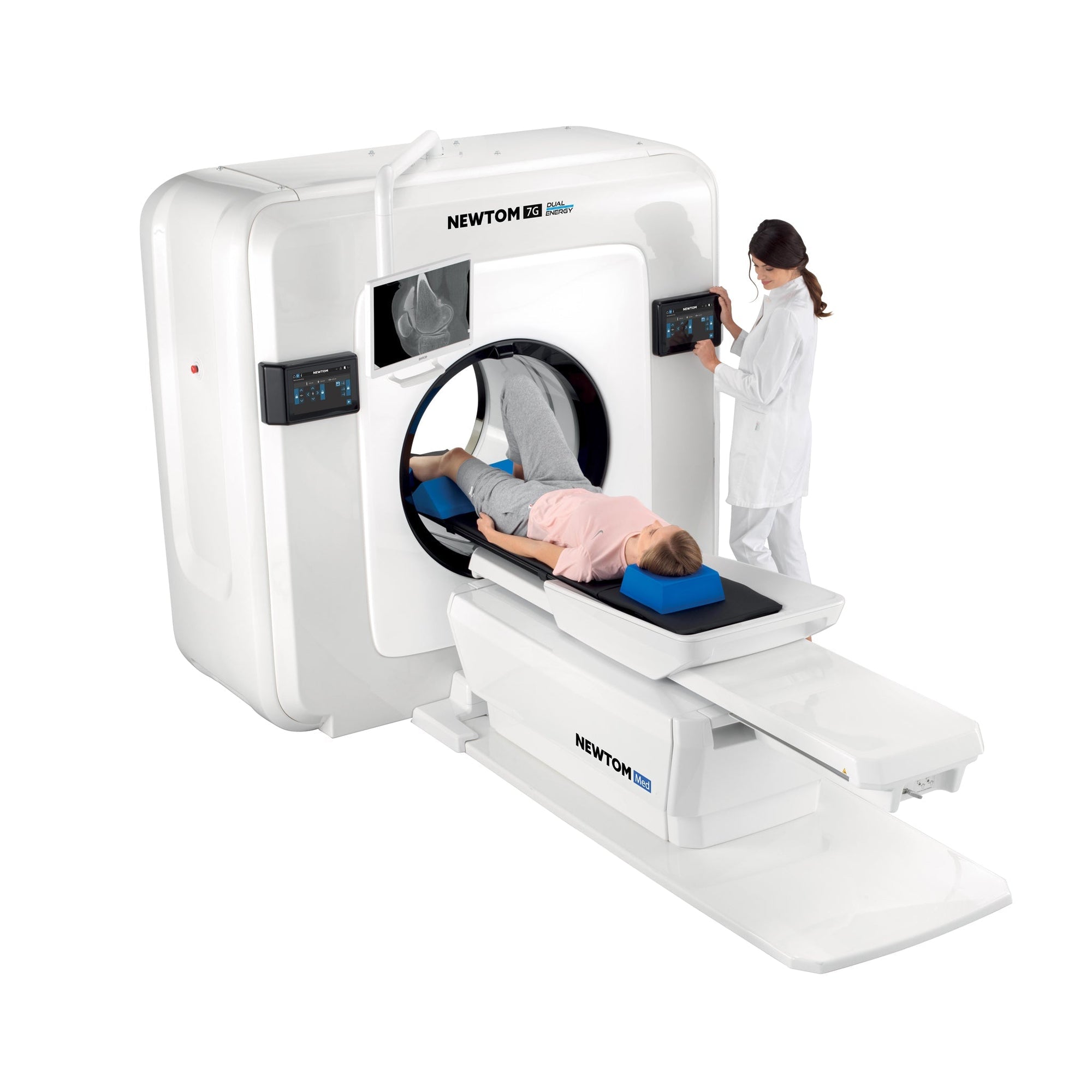

The technology behind the detector plays an important role in determining image quality, dose efficiency and the level of diagnostic detail available to clinicians.
Newtom CBCT systems incorporate different advanced detector technologies designed to optimise both 2D and 3D imaging applications, including CMOS, Direct Conversion and IGZO detectors.
Understanding the differences between these technologies can help practices make a more informed investment decision.
CMOS Sensors: Reliable 2D Imaging Performance
CMOS (Complementary Metal-Oxide Semiconductor) technology is widely used in digital imaging due to its efficiency, reliability and ability to deliver high-quality 2D images.
Within CBCT systems, CMOS sensors are commonly used for panoramic and cephalometric imaging, where speed, clarity and dose efficiency are essential.
The advantages of CMOS technology include:
-
Fast image capture for efficient patient workflows
-
High sensitivity to maximise image quality while managing radiation exposure
-
Low power consumption for reliable system performance
-
Excellent image consistency for routine 2D examinations
For everyday panoramic and cephalometric imaging, CMOS technology provides the speed and reliability practices need to support efficient diagnosis.
Direct Conversion Detectors: Capturing More Image Information
Traditional X-ray imaging systems typically rely on scintillator-based detectors, where X-rays are first converted into visible light before being converted into an electrical signal.
Direct conversion technology takes a different approach.
Instead of converting X-rays into light, direct conversion detectors use semiconductor materials to convert X-ray photons directly into electrical signals.
This eliminates an additional conversion step, helping to preserve more of the original image information.
Newtom’s Direct Conversion Detector technology, featured in systems such as the NewTom GiANO HR FullView, is designed to deliver:
-
High-resolution image capture
-
Improved contrast differentiation
-
Enhanced visualisation of fine anatomical structures
-
Reduced signal loss during image acquisition
For clinicians requiring detailed anatomical information, direct conversion technology can support greater diagnostic confidence when evaluating complex cases.
IGZO Detectors: Advanced 3D Imaging Technology
As CBCT applications continue to expand, the demands placed on 3D imaging detectors have increased.
IGZO (Indium Gallium Zinc Oxide) detector has been developed specifically to support high-performance 3D imaging.
IGZO is a semiconductor technology that enables highly efficient X-ray detection while maintaining excellent image quality and is now available on latest CBCT systems developed by Newtom, the VG-One and GiANO HR FullView.
The benefits include:
High spatial resolution
IGZO detectors are capable of capturing fine anatomical details, supporting applications where precision is critical.
Improved dose efficiency
The detector’s sensitivity allows clinicians to capture high-quality 3D images while supporting low-dose imaging protocols.
Reduced image noise
Better signal efficiency helps produce clearer images with improved visibility of anatomical structures.
Large dynamic range
IGZO technology can capture a wide range of X-ray intensities, helping maintain image quality across different clinical applications.
NewTom’s VG-One incorporates advanced IGZO detector technology, helping practices access high-quality 3D imaging in a compact, versatile CBCT solution.
Why Sensor Technology Matters When Choosing a CBCT
A CBCT system is a long-term investment. While factors such as voxel size, image resolution, Field of View (FOV) and software capabilities are all important considerations, the detector technology behind the system ultimately determines how effectively X-ray information is captured and transformed into clinically useful images.
The right sensor technology helps practices achieve the ideal balance between:
✔ Diagnostic confidence
✔ Image clarity
✔ Dose optimisation
✔ Workflow efficiency
✔ Long-term clinical versatility
The Newtom VG-One and GiANO HR FullView deliver more than impressive specifications, they deliver image quality clinicians can trust. By combining advanced detector technologies with intelligent imaging software, Newtom captures the diagnostic information that matters most, supporting confident clinical decisions while optimising radiation dose.
When comparing CBCT systems, look past the specificationand look at the sensor behind the image, because that is where true diagnostic performance begins.